





Manufacturer-led approach
New systems, refurbishment, service and parts are reviewed within one engineering and manufacturing workflow.
Correct identification for chain elongation, broken wires, crushing, corrosion and diameter change.
Part name alone is not a decision. Nameplate, dimensions, voltage, connector/interface and equipment data are checked together.
Explore technical path 02Mechanical dimensions, electrical rating and operating conditions are core compatibility inputs.
Explore technical path 03If the original part is unavailable, refurbishment, adaptation or manufacture is considered only after technical compatibility is verified.
Explore technical path 04After replacing safety or motion components, adjustment and functional checks should be performed by competent technical personnel.
Explore technical pathWorkshop and field footage, technical content and service routes are connected within one information architecture.
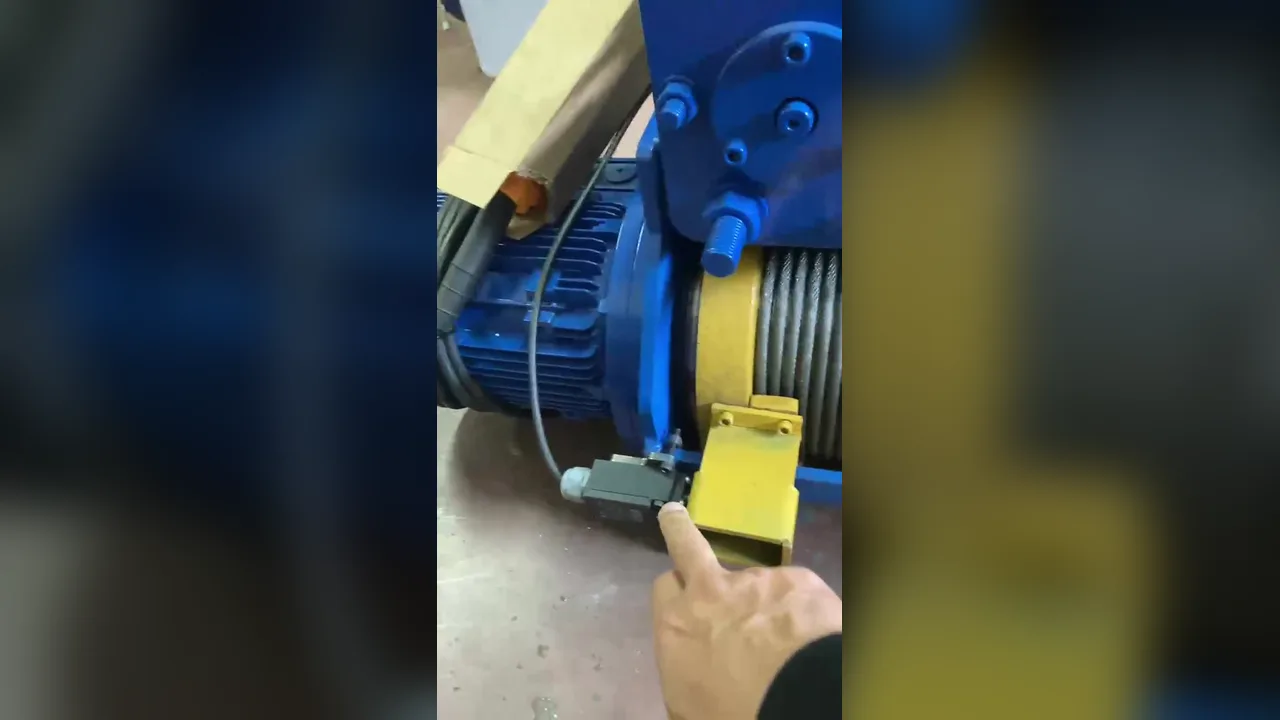
These phrases may describe the same technical requirement. Relevant links lead to the most useful selection, pricing, service, parts or fault page.
Diameter, construction/grade, connections, drum/sheave geometry and load path are required for correct selection.
This content is not a remote repair instruction. Measurement, adjustment, removal and commissioning of safety components must be performed by competent technical personnel.
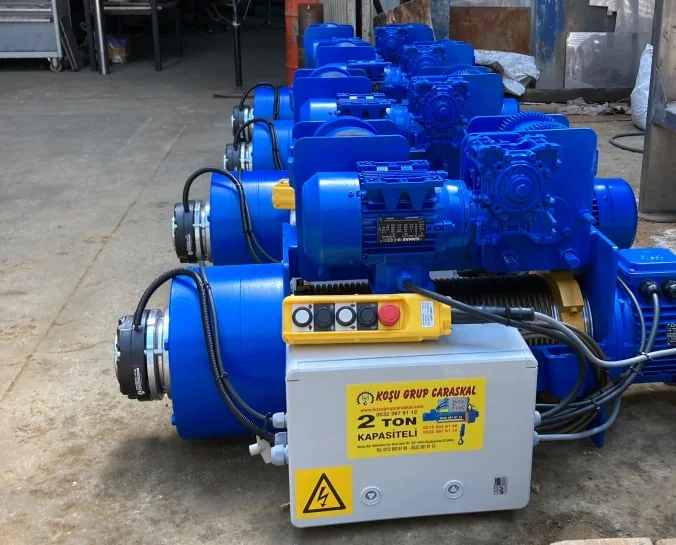
Industrial electric chain hoist for workstation, monorail and crane applications, selected by load, lift height, duty, trolley arrangement and site conditions.
Explore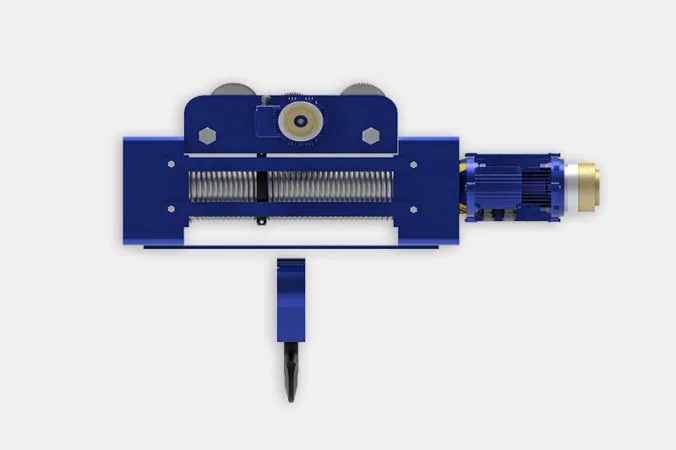
Electric wire rope hoist for industrial crane systems, engineered around load, speed, duty class, hook approach, trolley layout and maintenance access.
Explore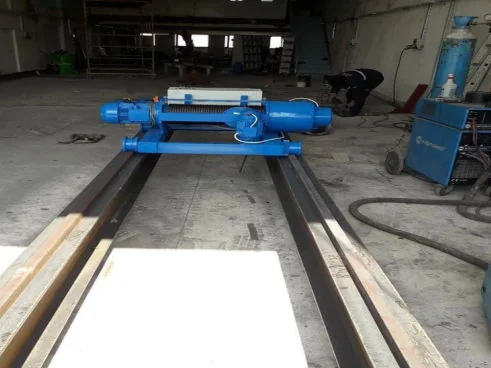
Monorail crane and hoist systems engineered around runway route, suspension points, curves, electrification, load flow and process access.
ExploreCorrect part identification and safe service data for load drift, delayed stopping, brake noise and overheating.
ExploreDimensional and compatibility checks for cross-winding, groove escape or a damaged rope guide.
ExplorePart identification and fault data for upper/lower limits, travel end stops and safety cut-off functions.
ExploreSystem identification for transmitter/receiver pairing, pushbutton, emergency stop, battery and output-relay faults.
ExploreMaximum load, lifting height, horizontal travel, span, operating frequency, power supply, site photographs and installation location help determine the correct system.
A preliminary quotation can be prepared from basic data. A site survey is recommended when the supporting structure, runway, floor, power or installation conditions affect the project.
The scope is technically reviewed after receiving the system type, capacity, brand/model, fault symptoms and site location.
Labels, serial data, capacity, photographs, dimensions and connection details are used to identify a suitable part.
Manufacturing and service coordination from Istanbul is planned across Türkiye according to project scope, schedule and location.
Yes. Project data can be collected remotely, while manufacturing, shipping, installation and service are planned nationwide according to scope and site conditions.
International manufacturing and project enquiries are accepted. Country, power supply, site dimensions, delivery model, installation and documentation are clarified during quotation.
No. The tools prepare enquiry data. Capacity, structure, duty class, dynamic effects and safety require authorised engineering verification.
Initial assessment and service coordination cover hoists, bridge and gantry cranes, controls, brakes, limits, motors, travel, power feeds, chain/rope and spare-part faults.
Equipment labels, full system, runway/beam, hook area, panel, pendant, fault point and safe-distance site views accelerate assessment.
Manufacturer instructions, use intensity, environment, load spectrum, fault history and legal requirements are reviewed together.
A scope can be defined after reviewing structure, mechanics, brakes, limits, controls, motors, gearboxes, power supply and spares availability.
Make/model, serial and capacity labels, dimensions, connectors, mounting, photos and existing part codes are compared together.
Diameter or pitch alone is not sufficient. Drum, sheave or pocket-wheel geometry, end connections, reeving, duty, lift height and the observed wear pattern are part of the identification. Repeated rope/chain damage can indicate an alignment or mechanism issue that should be checked before fitting a new component.
Diameter/pitch, construction and end connection.
Drum, sheaves or chain pocket wheel.
Broken wires, deformation, elongation, corrosion or irregular reeving.
 Share your experience
Scan the QR code or tap the button to open the Google review screen.
Review us on Google